
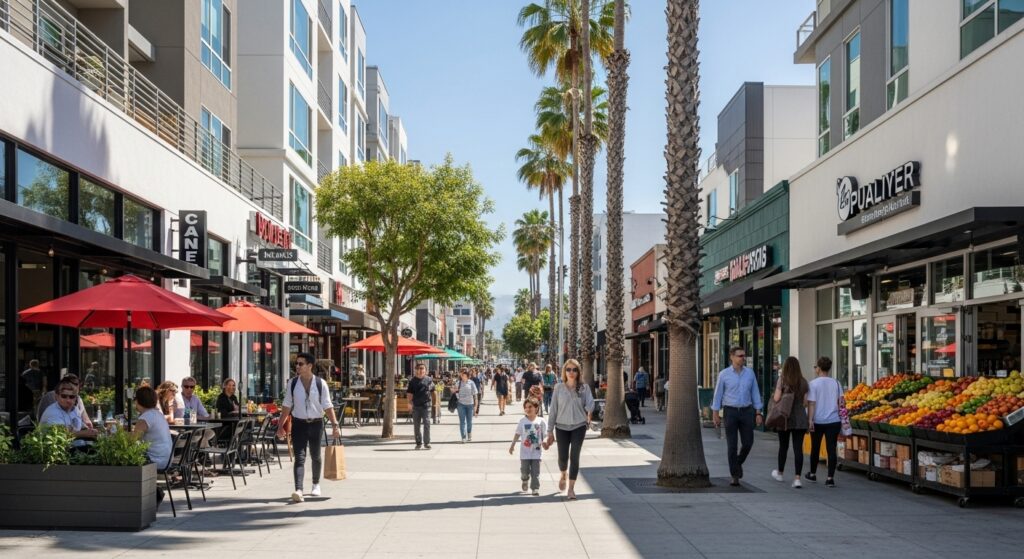
TL;DR: Where should renters look for walkable neighborhoods in LA?
If you’re searching for the best walkable neighborhoods in Los Angeles, focus on areas where daily life works on foot—groceries, coffee, transit, and places to unwind are all close by. For many renters, the strongest options are Koreatown, Downtown LA, West Hollywood, Santa Monica, Culver City, and Old Town Pasadena. These neighborhoods consistently support a car-light lifestyle without feeling limiting. If you want broader context before choosing an area, this complete guide to living in Los Angeles breaks down neighborhoods, costs, and renter lifestyle trade-offs.
Why “walkable” in LA means something different for renters
Let’s be honest—Los Angeles is still a car city. So when renters talk about walkability, they’re rarely saying, “I’ll never drive again.” What they usually mean is:
- “I don’t want to drive for every small errand.”
- “I want my days to feel simpler and less rushed.”
- “I want a neighborhood that supports my routine, not fights it.”
That’s where walkable areas in Los Angeles for renters stand out. The right neighborhood doesn’t eliminate your car—it reduces how often you need it.
Over time, I’ve noticed one pattern: renters who are happiest in walkable neighborhoods aren’t chasing a score. They’re building a rhythm.
A pro framework most walkability guides skip
Before choosing a neighborhood, test what I call the Walkability Stack. If one layer is missing, the area may look walkable but feel frustrating long term.
A neighborhood works when you can comfortably walk to:
- A real grocery store you’d actually use
- Transit you can realistically rely on when needed
- A third place you’ll return to (coffee shop, park, gym, or library)
If you can reach all three in about 10–15 minutes on foot, LA neighborhoods without a car start to feel realistic day to day—not just on weekends.
What renters should check before committing
Some neighborhoods photograph well and rank high on maps but disappoint once you move in. Common walkability traps include:
- The “nearby grocery store” is really a small convenience market
- Dining is walkable, but errands aren’t
- Streets feel fine during the day but empty or uncomfortable at night
- Wide roads and long crossings break the walking flow
If you work remotely or hybrid, these issues show up fast. A quick weekday test walk—late afternoon or early evening—often tells you more than any score.
Where walkability actually shows up in real life
Koreatown: dense, practical, and renter-friendly
Koreatown consistently ranks among LA’s most walkable neighborhoods, with a Walk Score of 93. Daily errands, dining, and transit are tightly clustered, which is why so many renters live here comfortably with minimal driving.
What it feels like:
- You can build a routine around your block
- Late-night options keep the area feeling active
- Transit access makes occasional car-free days realistic
For a deeper look at why this area works so well, this guide on the benefits of living near Koreatown explains the lifestyle in detail.
Downtown Los Angeles: walkability plus transit flexibility
Downtown LA earns a Walk Score of 94 and stands out for combining walkability with serious transit access. That mix gives renters more freedom—especially if you don’t want to plan every outing around parking.
What it feels like:
- Errands happen in one loop instead of multiple drives
- Meeting friends feels easier and more spontaneous
- Transit becomes usable, not just theoretical
Important note: Downtown is block-by-block. Choosing the right pocket makes all the difference.
West Hollywood: walkable by design
West Hollywood has an average Walk Score of 91 and is built around short blocks, active streets, and daily convenience.
What it feels like:
- Dining, fitness, and errands are naturally walkable
- Streets stay lively throughout the day and evening
- It supports a social, neighborhood-driven lifestyle
Rent is higher here, but many renters balance that by cutting transportation costs and daily friction.
Santa Monica: walkability that supports healthier routines
Santa Monica’s average Walk Score of 83 (higher in downtown areas) reflects how easy it is to combine errands with movement.
What it feels like:
- Walking doesn’t feel like a chore
- Daily routines naturally include fresh air and activity
- A car-light lifestyle feels achievable, not forced
This area works especially well for remote or hybrid workers who want their neighborhood to support better habits.
Culver City: calm, connected, and easy to live in
Culver City posts an average Walk Score of 76, with its most walkable pockets centered around the downtown core and transit lines.
What it feels like:
- A calmer, everyday version of walkability
- Bike-friendly streets expand your range
- Strong balance between convenience and focus
It’s a popular choice for professionals who want walkability without constant intensity.
Old Town Pasadena: walkable with breathing room
Old Town Pasadena offers a more relaxed version of walkable living. Shops, dining, and errands cluster together, but the pace feels slower than central LA.
What it feels like:
- Easy weekend and evening walking
- A calmer atmosphere without giving up convenience
- A good fit for couples and renters who value space
This is walkability without crowding.
Honorable mentions renters often ask about
You’ll also see these neighborhoods mentioned frequently in top-ranking walkability lists:
- MacArthur Park / Westlake – extremely high walk scores, very dense
- Echo Park – walkable pockets with strong local character
- Venice – highly walkable near Abbot Kinney, more car-dependent elsewhere
- Beverly Grove – strong retail walkability near The Grove
These areas can work well depending on budget, comfort level, and daily routine—but they’re more pocket-specific.
How to choose the right walkable neighborhood for you
Instead of asking “Which area is the most walkable?” ask:
- Do I want late-night energy or quieter evenings?
- Will I actually use transit, or just walk for errands?
- Do I need calm streets for work-from-home focus?
- Do I want beach air, city buzz, or neighborhood charm?
That mindset leads to better long-term satisfaction than chasing rankings alone.
Conclusion: Let your neighborhood do more of the work
Living in a walkable neighborhood in LA isn’t about perfection—it’s about reducing friction. When your groceries, transit, and daily reset spots are close, your routine feels lighter and your days feel easier. If walkability is high on your list, choose the neighborhood first, then the apartment. And if you’re ready to pair walkable living with comfort, design, and everyday convenience, you can see what sets Sagela apartments apart as a next step.